

Sleep is one of the most basic necessities of the human body, but millions of individuals struggle to obtain enough sleep. If you find yourself feeling exhausted throughout the day, waking up numerous times during the nite, or lying in bed unable to fall asleep, you may be suffering from one of the various sleep disorders that plague individuals across the world. The good news is that most of these disorders can be dealt with if you have the correct information, habits and care.
In this article we describe the main forms of Sleep Disorders, symptoms, frequent causes and the treatments that genuinely work. We’ll provide basic tips you can start implementing tonight as well. For more useful health guides, please visit healthtopices.com.
Health Topices: Sleep Disorders
Welcome to Health Topices, your trusted online resource for learning about Sleep Disorders, sleep health and healthier sleep practices. If you need knowledge on insomnia, sleep apnea, restless legs syndrome or other sleep issues, Health Topices is here to provide you with useful insights into enhancing Physical Health and general well-being. We also invite bloggers, writers and health freaks to share their knowledge via our Write For Us program. We also provide Backlinks services to aid relevant websites to create vital connections and enhance their online presence. If you are interested in guest writing, backlink opportunities or partnership feel free to check our Contact Us page. At Health Topics we think that greater sleep means a healthier and happier life!
Why Sleep Health Is Important
Before we jump into difficulties, let’s look at why sleep health is vital. Sleep is not just resting. Sleep helps your body to rebuild muscles , boost your immune system , and rid your brain of waste . That’s when your mind arranges memories and prepares for the next day.
Good sleep helps you in numerous ways.
- It enhances concentration, memory and learning.
- It helps to maintain a healthy heart and regular blood pressure.
- It helps regulate hunger and body weight.
- It raises your mood and reduces your tension.
- It helps keep your immune system robust.
If you do not sleep well for many days, your chances of health problems rise. These include diabetes, heart disease, depression, anxiety and tiredness-related accidents. Most adults need seven to nine hours of sleep per nite. If you often get less, or if you feel like you sleep badly even with ample hours, it is important to pay attention.
Sleep Disorders in Adults
Sleep disturbances are fairly frequent in adults. It might be many things. Maybe there’s a medical condition underpinning it, like heart troubles or asthma. Mental health can also be a factor, with illnesses like sadness or anxiety contributing to problems with sleep. Sometimes it’s genetic, or it could be a side effect of your medications. Even working a nite shift or having a cup of coffee before bedtime can end up on the list of troublemakers.
Sleep disturbance is a condition that influences your sleep quality, timing, and amount. Some disorders prevent you from going to sleep. Others wake you up constantly, or make you sleepy at the wrong times.
Categories of Sleep Disorders
There are various types of sleep problems, but the most frequent include the following.
Insomnia:
Insomnia is the most recognized sleep problem.Insomnia means you have difficulty falling asleep, staying asleep, or both. It can make you feel tired and irritable. It might be caused by stress, poor sleep habits, drugs or underlying health concerns.
Sleep Apnea:
In sleep apnea breathing pauses and resumes again multiple times during the nite. This happens a lot when the muscles in the throat relax too much. People with this illness often snore loudly and feel quite exhausted in the morning, even after a full night’s in bed.
Restless Legs Syndrome:
Restless legs syndrome is an uncomfortable desire to move the legs, especially at nite or when lying down. Many describe it as a creeping, tingling, or pulling sensation. Moving the legs provides short-term relief, but the feeling returns and disrupts sleep. It can be caused by low levels of iron, pregnancy, kidney difficulties and some medications.
Narcolepsy:
Narcolepsy is a chronic brain disorder that produces uncontrollable, overwhelming urges to sleep during the day. A person could fall asleep while conversing, eating, or even driving.
Parasomnias:
These are peculiar actions during sleep include sleepwalking, talking in your sleep, nite terrors, and acting out dreams. They are more frequent in children but adults can also develop them.
Circadian Rhythm Disorders:
Your body has an internal clock that informs you when to go to sleep and when to wake you up. Sleep is difficult when this clock gets out of whack, as it does for nite shift workers or persons with jet lag. This is called a circadian rhythm sleep disorder.
Sleep Disorders Symptoms
Knowing the symptoms of sleep disturbances will help you to identify sleep issues early. Look out for these signs:
- It takes more than half an hour to fall asleep most nites
- Waking awake numerous times at nite
- Loud snoring or gasping or choking during sleep
- Having a lot of daytime sleepiness.
- Trouble concentrating or remembering
- Mood swings, anger or depression
- Morning headaches
- A need to wiggle your legs during nite.
- Falling asleep at weird moments.
If you experience two or more of these indicators for more than a few weeks, talk to a doctor. Early screenings can avert major health problems later on.
Common Causes of Sleep Disorders
There are various causes of sleep difficulties, frequently more than one.
Stress and anxiety: It’s hard to switch off an active mind at nite.
Poor lifestyle habits: Late nite caffeine, large dinners, smoking, alcohol and long hours on screens all interfere with sleep.
Medical issues: Pain, asthma, acid reflux, thyroid problems and heart disease can all impair sleep.
Medicines: Some drugs for blood hypertension, allergies and depression can make you sleepless.
Irregular schedules: Your body clock is confused by changing bedtime every day.
Hormonal changes: This is a big reason that many people miss, as we describe below.
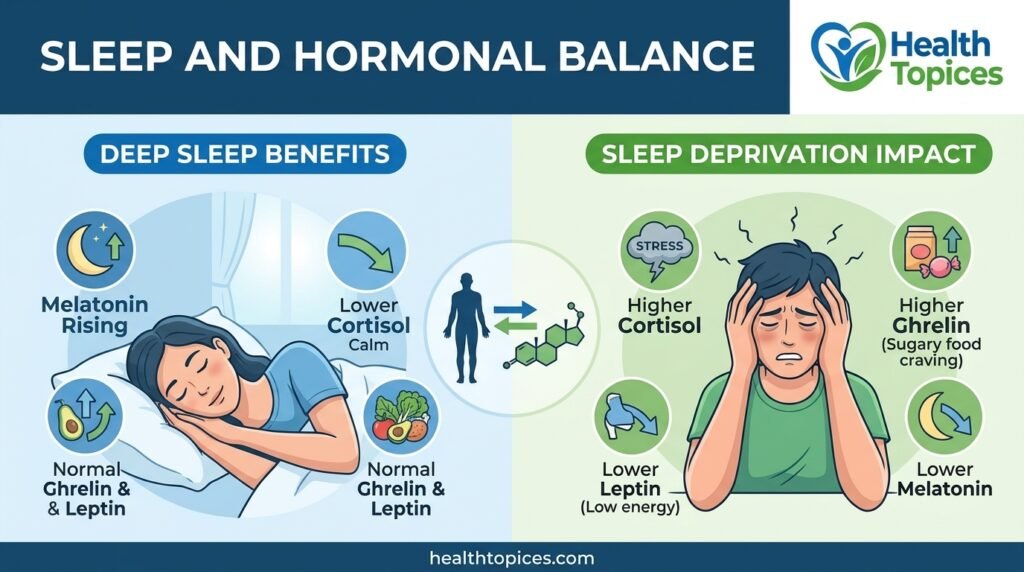
Sleep and Hormonal Balance
Sleep and hormone homeostasis are closely related, and this applies to both sides. When it gets dark, your body makes melatonin, the hormone that signals you to sleep. Low cortisol (stress hormone) should be low at nite and rise in the morning. Sleep deprivation keeps cortisol up, which in turn makes it harder to sleep.
Poor sleep also alters the hormones that control hunger. Ghrelin, which raises your hunger, increases, and leptin, which tells you that you are full, decreases. And that’s why sleepy people seek sugary food. And gain weight.
During a woman’s cycles, pregnancy and menopause, the levels of estrogen and progesterone alter, which can cause sleep abnormalities. Men with low testosterone can also have problems with bad sleep. Getting your sleep fixed can get your hormones back into a healthy balance, and balanced hormones help you sleep better.
Sleep Disorder Treatments
The correct sleep disorder treatment relies on the nature and source of the problem. Your doctor may suggest some or all of the following.
Cognitive behavioral therapy for insomnia: This is a talking treatment where you learn to improve your ideas and habits that are getting in the way of sleep. It is generally the first choice for persistent insomnia, and works for many.
CPAP therapy: A tiny machine for sleep apnea softly pumps air through a mask into the airway to keep it open during sleep.
Iron supplements and drugs: If you have restless legs syndrome, your doctor may check your iron level and offer supplements or medicines that soothe the nerves.
Light therapy: Exposure to bright light in the morning helps re-set the biological clock in persons with issues with circadian rhythm.
Medicines for sleep Sleeping tablets can be used in some circumstances for a limited time but only on medical advice.
Treating other disorders. Treating pain, acid reflux, anxiety or thyroid problems often helps sleep a lot.
Never take sleeping pills on your own. Always get a trained doctor’s opinion first.
Tips for Better Sleep
Many sleep difficulties can be solved with minor everyday modifications. Here are some easy and safe techniques to get better sleep.
Follow a Specific Sleep Routine:
Go to bed and get up at the same time every day, including weekends. Having a specific sleep regimen can train your body clock and will help you fall asleep quicker. Try to get into a regular rhythm which offers you at least seven hours in bed.
Build a Healthy Bedtime Routine:
A healthy bedtime routine notifies your brain that the day is coming to a close. Start winding down 30-60 minutes before you go to sleep. Have a warm bath, read something relaxing, do some gentle stretching, listen to some quiet music or put your problems down in a notepad. Keep your bedroom cold, dark and silent.
Avoid Screen Time Before Bed:
Phones, tablets and televisions emit blue light, which reduces melatonin. Avoid screen use at least one hour before bedtime. If you must use a device, turn on nite mode and keep the light to a minimum. Charge your phone away from your bed so you don’t get tempted to look at it.
Exercise Regularly:
Regular physical activity helps you fall asleep more quickly and experience deeper sleep. Most days half an hour of walking, cycling or mild exercise will do. If you do a rigorous workout, try to finish it at least three hours before you go to bed. It can give you more energy.
Limit Daytime Naps:
If you have difficulties sleeping at nite, limit daytime naps to twenty or thirty minutes, and do not snooze after three o’clock in the afternoon. Long or late naps lower your sleep drive and make it tougher to fall asleep at nite.
Eat a Healthy Light Meal at Night:
A big meal might lead to heartburn and pain. Have a small supper two to three hours before going to bed. This can be soup, vegetables, rice with lean protein or yogurt. Avoid spicy meals, too much sugar and huge quantities in the evening. Avoid coffee after midday and don’t drink alcohol too close to bedtime as it disturbs sleep.
How to Improve Sleep Quality Naturally
If you want to know how to naturally boost sleep quality, add a few extra actions to the behaviors above:
- Get morning sunshine to help your biological clock.
- Try deep breathing, meditation or moderate yoga to help relax your mind.
- Have herbal teas like chamomile in the evening.
- Select a comfy mattress and pillow that will support your body.
- Reserve your bedroom for sleep exclusively, not for work or TV.
- If you can’t sleep after twenty minutes get up and conduct a peaceful activity and return to bed when you are drowsy.
Natural methods take time so be patient. Most people experience real progress in 2-4 weeks of continuous practice.
When to See a Doctor
Changes in lifestyle help many people, but certain sleep issues require medical attention. See a doctor if
- Your sleep problem has been going on for over 1 month.
- You snore loudly or you stop breathing when you sleep.
- You feel drowsy when driving or working.
- Every nite you feel restless and uncomfortable in your legs.
- Your mood, work or relationships are suffering due to poor sleep.
Your doctor may recommend a sleep study, which captures your breathing, brain waves, and body movements as you sleep. This examination is pain free and provides definite answers .
Final Thoughts
Sleep issues are prevalent, but you don’t have to live with them. By studying the types, catching the symptoms early, knowing the causes, and adopting easy everyday routines, you may take back control of your nites and your health. Start with one or two small things, like a regular bedtime and reduced screen time, and build on that. Good sleep is the basis of a healthy, happy and energetic life.
For more trusted advice on sleep, diet and wellness, continue reading on healthtopices.com and take the next step toward improved health today.
FAQS
1. What’s a sleep disorder?
Sleep disorders are conditions that alter the quality, timing and amount of sleep. They can make it hard to fall asleep, stay asleep, or enjoy a comfortable night’s sleep.
2. What causes sleeping disorders?
Stress, worry, improper sleeping habits, medical issues, hormonal changes, certain drugs and irregular sleep regimens can all cause sleep disturbances.
3. How to Identify sleep problems?
Doctors diagnose sleep disorders based on a medical history, physical examination, sleep diary and tests of sleep such as polysomnography.