

“Millions of people worldwide are vitamin D-deficient and don’t even know it. The indicators are frequently subtle and easy to attribute to stress, aging or a busy life. If you feel fatigued, sore, or down in the dumps for no apparent reason, you may have a vitamin D deficit to contend with. In this guide you’ll learn what causes it, how you may recognize it and how to remedy it. You will also find basic advice from the team at https://healthtopices.com/ that will assist you in protecting your health for years to come.
Health Topices: Vitamin D Deficiency
Healthtopices is a health blog that aims to provide easy to grasp information about common diseases in the USA, health issues, symptoms, causes, treatments and prevention. Our mission is to offer our users clear, helpful and accessible health knowledge to assist them make educated decisions. We also accept health-related contributions through our Write For Us page and have possibilities for businesses and media interested in Guest Posting and Backlinks. Please visit our Write For Us, Guest Posting, Backlinks and Contact Us pages to get in touch with HealthTopices if you want to find out more about our services, study health themes, write an article or work with us.
What Is Vitamin D Deficiency?
Vitamin D is a vitamin in your body that behaves like a hormone. It helps your gut absorb calcium and phosphorus, which your bones need to be strong . It also supports your muscles, nerves, and immune system.
Vitamin D shortage results in many health problems, especially because it is one of the vital vitamins for health. The problem is greater with modern life because most of the body’s vitamin D comes from sunlight. Many of us work indoors, cover our skin up or live in regions where it’s really hot or where the winter sun is weak.
A Normal Vitamin D Level: What Should Your Number Be?
A simple blood test can tell where you stand. Doctors commonly measure the circulating form of vitamin D in your blood. This is a broad guidance, but labs and doctors may use somewhat different ranges:
- Levels below 20 ng per mL are generally labeled inadequate.
- 20 to 29 ng per mL is frequently considered low or insufficient.
- Generally, a typical vitamin D level is considered to be between 30 and 50 ng per mL, with a few physicians accepting levels as high as 100.
- More is not necessarily better as too high quantities might be dangerous.
Always discuss your individual result with your doctor. How you read the number is affected by your age, health and drugs.
Vitamin D Deficiency Causes
If you know what causes it, you can stop a problem before it occurs. The most common causes of vitamin D insufficiency are:
Not enough sunshine. Sunshine hitting your skin generates vitamin D. People who stay inside, wear full covers, or use powerful sunscreen all day may produce less. Cloudy weather, pollution and short winter days also reduced production.
Darker skin. Skin with greater pigmentation creates vitamin D slower. It takes longer in the sun for people with darker skin to produce the same quantity.
Poor eating habits. Natural vitamin D exists in very few foods. If you don’t often eat fish, eggs or fortified meals, you may be getting too little.
Old. When we become older, our skin creates less vitamin D and our kidneys are less efficient at converting it.
Mass . People with obesity tend to have decreased blood levels of vitamin D, which can become trapped in body fat.
Health issues. Certain gut, liver or kidney conditions can prevent the body from using vitamin D such as celiac disease, Crohn’s disease and kidney illness.
Some medications. Several seizure medications, steroids and several other treatments can reduce vitamin D over time.
Vitamin D Deficiency in Adults
Most people assume vitamin D insufficiency is rare in adults, but it’s more common than you would think. Those who work in offices, work nite shifts and reside distant from the equator are at higher risk. Adults over 50 are also more likely to be low.
The problematic thing is that many adults initially have minimal symptoms. Over months or years the lack can damage bones, hinder healing and lower your energy. That’s why regular checks are important, especially if you have more than one risk factor.
Vitamin D Deficiency in Women
Vitamin D deficiency in women is a topic that demands special attention.
Low sunshine — we obtain a lot of our Vitamin D from exposure to UVB. If you spend a lot of time inside, or you’re going through a UK winter, you may not be getting enough.
Dietary gaps – Vitamin D is naturally found in foods such as oily fish, egg yolks and fortified products (such plant-based milks) but many women do not obtain enough from diet alone.
Pregnancy and nursing – The need for Vitamin D increases throughout these periods as some is passed to the infant.
Age – As we age, the body’s ability to convert Vitamin D to its active form diminishes.
Despite your best efforts, you may not always be able to receive enough Vitamin D via sunlight and nutrition, especially during the colder months. That’s why vitamins can be a good idea.
Vitamin D Deficiency Symptoms
People often look for vitamin D insufficiency symptoms since they feel poorly and don’t know why. Watch out for these symptoms:
- Tired all the time, even after a good night’s sleep
- Muscle cramps/weakness
- Pain in the back, hip or leg
- More often feeling gloomy or depressed
- Often unwell, since the immune system needs Vitamin D
- Slow healing cuts and wounds
Some symptoms are less well recognized but are true and two of them cause the most alarm to people.
Vitamin D Deficiency and Hair Loss
One of the most discussed indications is loss of hair. Vitamin D helps to wake up the hair follicles, the microscopic spaces in your skin where hair forms. Low levels might cause follicles to malfunction, resulting in hair thinning or falling out more than normal. Vitamin D deficiency has been related to a patchy kind of hair loss called alopecia areata. There are several reasons for hair loss therefore do not blame only vitamin D. But if you’re thinning and also feeling weary, a blood test is a good idea.
Vitamin D Deficiency and Joint Pain
Another typical problem is joint discomfort. Vitamin D helps your body use calcium. Low amounts can cause your bones to become mushy and painful. Many people suffer from pains in the knees, hips or lower back. The muscles around the joints may feel weak too and this contributes to the discomfort. While correcting a low vitamin D level won’t fix every joint condition, it often provides considerable relief if the shortage is the culprit.
Vitamin D Deficiency Diseases
But if the levels are low for a long time, it might cause major health concerns. The major disorders caused by vitamin D deficiency are:
- Rickets in children, with soft bones and bowed legs
- Soft painful bones in adults caused by osteomalacia
- Osteoporosis, which causes bones to become thin and brittle
- Falls and weak muscles, especially in the elderly
Researchers are also looking at associations between low vitamin D and heart disease, type 2 diabetes and several immunological diseases. More research is needed but these links are another solid reason to maintain your levels healthy.
Vitamin D Deficiency Treatment
The good news is that treatment for vitamin D deficiency is straightforward and effective for most people. Your doctor will do a blood test, then recommend a plan.
Additives . Most doctors suggest vitamin D3 since it raises blood levels well. If there is a real deficiency, a doctor may recommend a greater dose for a few weeks, followed by a lower daily dose to maintain levels. Take your supplement with a meal that has some fat in it, as vitamin D is best absorbed this way.
Safe sun time. A little, frequent sun exposure can assist and we’ll explore it below.
Dietary modifications. You can help your treatment by adding foods with vitamin D.
Tests to follow up. A few months later, your doctor may check your level again to be sure it is going up.
Please do not self-dose very high dosages. Too much vitamin D can cause nausea, weakness and a dangerous buildup of calcium in the blood. Follow medical advice always.
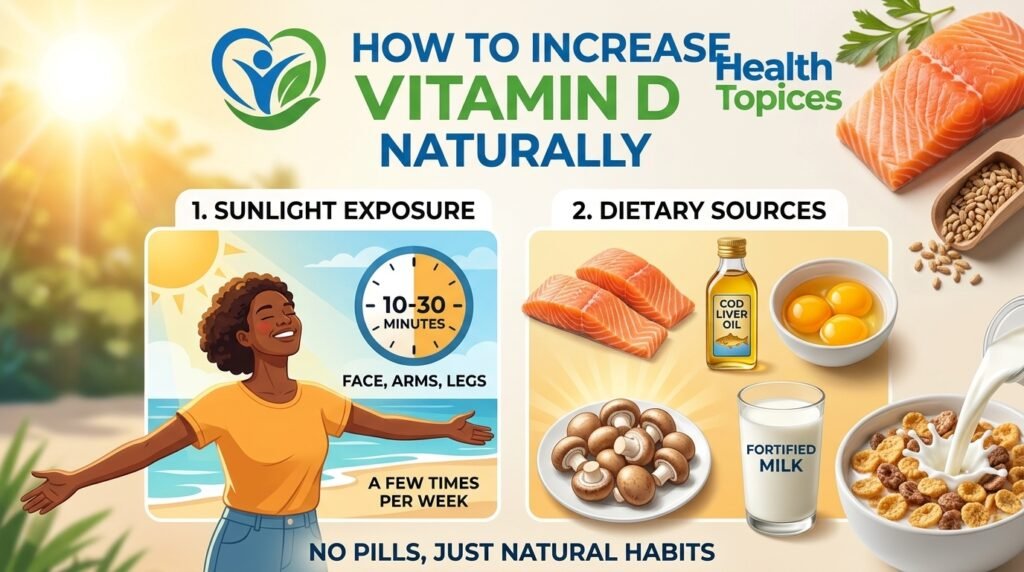
How to Increase Vitamin D Naturally
There are many people who want to boost their levels without just popping drugs. Here’s how to naturally boost Vitamin D with regular practices.
Vitamin D From Sunlight:
Vitamin D is most naturally obtained from sunlight. A lot of health professionals advise approximately 10 to 30 minutes of midday sun on your face, arms and legs a few times per week. How long you require depends on your skin tone, where you live and the season. People with darker skin may take a bit longer. Keep your skin from burning. Sunburn enhances your chance of skin cancer, so cover up or use sunscreen after your short sun exposure.
Natural Sources of Vitamin D:
Not merely sunlight. Vitamin D occurs naturally in fatty fish, egg yolks and mushrooms exposed to sunlight. Some foods are fortified – they have been enriched with vitamin D. These sources together make it easier to meet your daily target.
Foods Rich in Vitamin D
If you want to eat your way to healthier levels, add these vitamin D-rich items to your grocery list:
- Salmon is one of the top food
- Mackerel & Sardines
- Tuna from a can, in moderation
- Cod liver oil is highly high in vitamin D.
- yolks
- Fortified milk and plant milks like soy or almond
- Breakfast cereals and orange juice fortified
- Mushrooms, especially those growing in the sun
- Small amounts of beef liver
A Simple Vitamin D Deficiency Diet Plan
Here is an easy eating plan for vitamin D deficiency that you may tweak to your liking. This is only a sample, so check with your doctor or dietician before making any major adjustments.
Breakfast: Scrambled eggs with sautéed mushrooms, a glass of fortified milk and a bowl of fortified cereal on the side.
Lunch: Sandwich with tinned tuna or sardines, fresh salad, glass of fortified orange juice.
Snack: Plain yogurt with fruit or a smoothie made with enriched plant milk.
For dinner we had baked fish, vegetables and brown rice. Eat fatty fish two to three times a week.
Daily habit: If your doctor has recommended a vitamin D supplement, take it with your largest meal. Take some time outside in the daylight, too.
In fact, diet alone may not be enough to correct a real deficiency, therefore the optimum plan is usually a combination of diet, sunlight and supplements.
How to Prevent Vitamin D Deficiency
Prevention is better than cure. Here are some tips to follow:
- Get safe sun exposure a couple times a week.
- Eat fatty fish, eggs and fortified foods regularly.
- If you’re at high risk, ask your doctor about a supplement.
- If you have darker skin, are pregnant, over 50 or have a stomach or kidney condition, have a blood test every year.
- Keep moving. Exercise promotes strong bones and muscles.
When Should You See a Doctor?
Have persistent fatigue, bone pain, muscle weakness or hair loss that does not get better — book a visit. If you are in a high risk group, see your doctor as well. A simple test can give you a clear answer, and early treatment can safeguard your bones and your vitality.
Final Thoughts
Not many people have enough vitamin D, but it’s easy to spot and easy to correct. With the causes known, the signs to watch for (hair loss, joint discomfort, etc.), and how to develop easy habits around sunlight, food and supplements, you can keep your levels in a healthy range. Women, senior folks, and those who spend most of their time indoors should be especially vigilant.
For more trusted and straightforward health advice, check out the tutorials on https://healthtopices.com/ Your health is your biggest asset and tiny daily measures now can lead to stronger bones, more energy and a happier life tomorrow.
FAQS
1. What are the most prevalent signs of vitamin D deficiency?
Fatigue, bone discomfort, muscular weakness, recurrent infections and mood changes are typical symptoms. Some people may not have any symptoms at all, especially if their vitamin D levels are only slightly low.
2. Can a lack of vitamin D promote hair loss?
Low amounts of vitamin D have been linked to certain types of hair loss, specifically alopecia areata. However, vitamin D insufficiency isn’t the only potential explanation and further research is needed to understand the association.
3. Which foods help to raise vitamin D?
Fatty fish such as salmon, tuna and sardines are good sources of vitamin D. Fortified milk, plant-based drinks, breakfast cereals, egg yolks and UV-exposed mushrooms can improve food intake.